The transcription factor NF-YA10 determines the area explored by Arabidopsis thaliana roots and directly regulates LAZY genes
Andana Barrios
Nicolas Gaggion
Natanael Mansilla

Thomas Blein
Céline Sorin
Leandro Lucero
Enzo Ferrante
Martin Crespi
Federico Ariel
The Plant journal : for cell and molecular biology, Volume 121, Issue 5, March 2025, e70016
Abstract
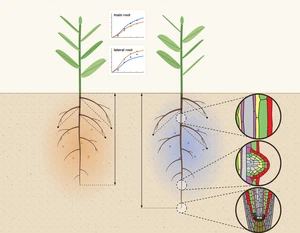
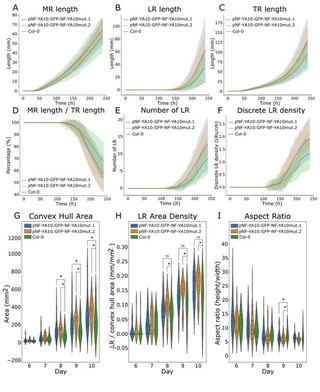
Root developmental plasticity relies on transcriptional reprogramming, which largely depends on the activity of transcription factors (TFs). NF-YA2 and NF-YA10 (nuclear factor A2 and A10) are downregulated by the specific miRNA isoform miR169defg. Here, we analyzed the role of the Arabidopsis thaliana TF NF-YA10 in the regulation of lateral root (LR) development. Plants expressing a version of NF-YA10 resistant to miR169 cleavage showed a perturbation in the LR gravitropic response. By extracting several features of root architecture using an improved version of the ChronoRoot deep-learning-based phenotyping system, we uncovered that these plants showed a differential angle of LRs over time when compared to Col-0. Detailed phenotyping of root growth dynamics revealed that NF-YA10 misregulation modulates the area explored by Arabidopsis roots. Furthermore, we found that NF-YA10 directly regulates LAZY genes, which were previously linked to gravitropism, by targeting their promoter regions. Hence, the TF NF-YA10 is a new element in the control of LR bending and root system architecture.