High-quality genome sequence of white lupin provides insight into soil exploration and seed quality
Bárbara Hufnagel
André Marques
Alexandre Soriano
Laurence Marquès
Fanchon Divol
Patrick Doumas
Erika Sallet
Davide Mancinotti
Sébastien Carrere
William Marande
Sandrine Arribat
Jean Keller
Cécile Huneau

Thomas Blein
Delphine Aimé
Malika Laguerre
Jemma Taylor
Veit Schubert
Matthew Nelson
Fernando Geu-Flores
Martin Crespi
Karine Gallardo
Pierre-Marc Delaux
Jérôme Salse
Hélène Bergès
Romain Guyot
Jérôme Gouzy
Benjamin Péret
Nature communications, Volume 11, Issue 1, January 2020, 492
Abstract
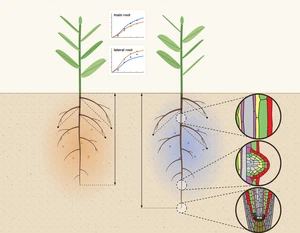
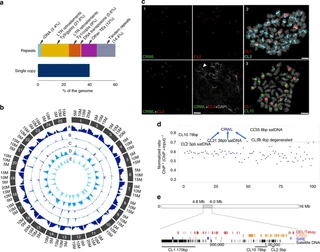
White lupin (Lupinus albus L.) is an annual crop cultivated for its protein-rich seeds. It is adapted to poor soils due to the production of cluster roots, which are made of dozens of determinate lateral roots that drastically improve soil exploration and nutrient acquisition (mostly phosphate). Using long-read sequencing technologies, we provide a high-quality genome sequence of a cultivated accession of white lupin (2n = 50, 451 Mb), as well as de novo assemblies of a landrace and a wild relative. We describe a modern accession displaying increased soil exploration capacity through early establishment of lateral and cluster roots. We also show how seed quality may have been impacted by domestication in term of protein profiles and alkaloid content. The availability of a high-quality genome assembly together with companion genomic and transcriptomic resources will enable the development of modern breeding strategies to increase and stabilize white lupin yield.
Agricultural Genetics
Plant Domestication
Plant Genetics
Lupinus Albus L.
White Lupin
Genome Annotation
Cluster Root
Lateral Root (LR)
Transcriptomics