long non-coding RNA (lncRNA)

Over the past decades, advances in RNA sequencing methods (RNA-Seq) have revealed that a large proportion of eukaryotic genomes are transcribed outside the coding regions. These thousands of new transcripts have been named non-coding RNAs (ncRNA). Among them, long ncRNAs (lncRNAs) are RNA longer than 200nt with a low protein coding capacity. They are generally polyadenylated, lowly expressed and in a fairly localised manner (ie in few cells) or specific in response to environmental stresses.

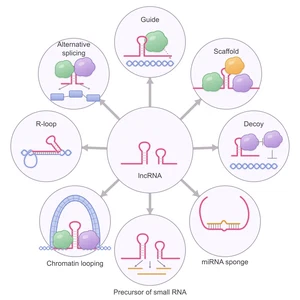
LncRNAs have long been regarded as transcriptional noise due to their low protein coding potential, their poor conservation and their low level of expression. However, an increasing number of studies have shown that lncRNAs can regulate gene expression at different levels and play an important role in a variety of biological processes. LncRNAs have been shown to regulate the expression of contiguous genes (cis action) or act at a distance (trans action) via interactions with ribonucleoproteins or other protein complexes, modulate splicing of mRNA transcripts and/or hijack proteins or RNA molecules. Therefore they seems to be involved in all steps of gene expression regulation.

According to their locations with respect to the other genes, lncRNAs are classified into different categories:

  • intergenic lncRNAs (lincRNAs), when they are located in between two genes
  • intronic lncRNAs, when they are located in introns of coding genes
  • sense lncRNAs, when they are the result of specific RNA isoform of a coding genes
  • natural antisense transcripts (NATs), when they are located on the other strand of the DNA of a gene.

The major challenges in lncRNAs investigation are to understand their mechanism of actions and how are they evolving.


Camille Fonouni-Farde, Aurélie Christ, Thomas Blein, Juan Sebastián Ramírez-Prado, María Florencia Legascue, David Latrasse, Michaël Moison, Leandro Lucero, Lucía Ferrero, Daniel Gonzalez, Moussa Benhamed, Leandro Quadrana, Martin Crespi, Federico Ariel
Genome biology, Volume 23, Issue 1, August 2022, 181
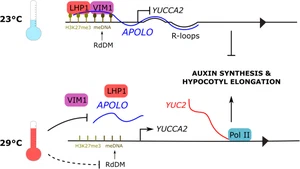
The Arabidopsis APOLO and human UPAT sequence-unrelated long noncoding RNAs can modulate DNA and histone methylation machineries in plants
Thomas Roulé, Aurelie Christ, Nosheen Hussain, Ying Huang, Caroline Hartmann, Moussa Benhamed, Jose Gutierrez-Marcos, Federico Ariel, Martin Crespi
Corresponding Author
, Thomas Blein
Corresponding Author
Molecular plant, Volume 15, Issue 5, May 2022, 840—856
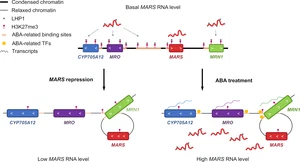
The lncRNA MARS modulates the epigenetic reprogramming of the marneral cluster in response to ABA
Thomas Roulé, Martin Crespi, Thomas Blein
Biochemical Society transactions, Volume 50, Issue 1, February 2022, 403—412
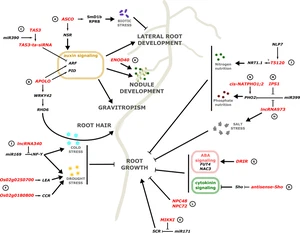
Regulatory long non-coding RNAs in root growth and development
Constanza Chialva, Thomas Blein, Martin Crespi, Diego Lijavetzky
Scientific reports, Volume 11, Issue 1, February 2021, 4093
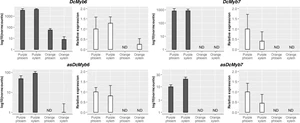
Insights into long non-coding RNA regulation of anthocyanin carrot root pigmentation
Thomas Blein, Coline Balzergue, Thomas Roulé, Marc Gabriel, Laetitia Scalisi, Tracy François, Céline Sorin, Aurélie Christ, Christian Godon, Etienne Delannoy, Marie-Laure Martin-Magniette, Laurent Nussaume, Caroline Hartmann, Daniel Gautheret, Thierry Desnos, Martin Crespi
Plant physiology, Volume 183, Issue 3, July 2020, 1058—1072
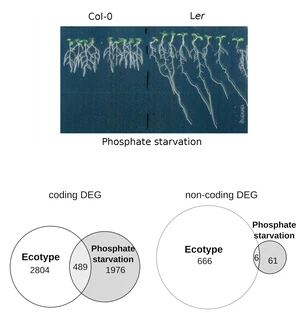
Landscape of the Noncoding Transcriptome Response of Two Arabidopsis Ecotypes to Phosphate Starvation
Richard Rigo, Jérémie Bazin, Natali Romero-Barrios, Michaël Moison, Leandro Lucero, Aurélie Christ, Moussa Benhamed, Thomas Blein, Stéphanie Huguet, Céline Charon, Martin Crespi, Federico Ariel
EMBO reports, Volume 21, Issue 5, May 2020, e48977
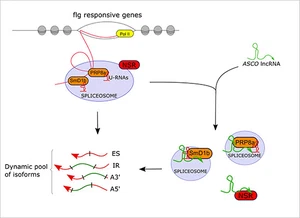
The Arabidopsis lncRNA ASCO modulates the transcriptome through interaction with splicing factors