RNA processing, silencing and chromatin regulation

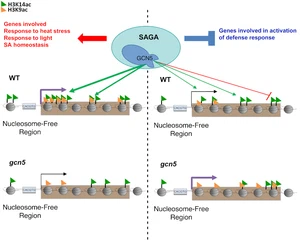
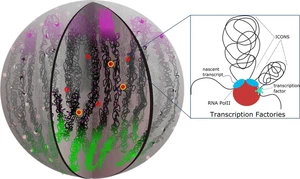
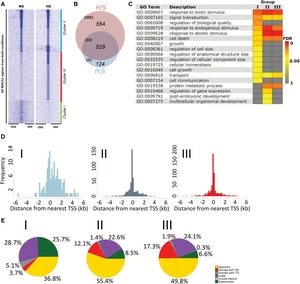
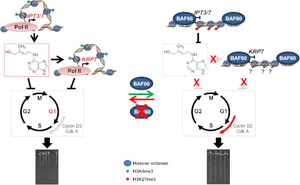
Gene expression in plants is controlled by interconnected layers of chromatin organisation, RNA processing and RNA silencing. We study how chromatin remodellers and histone modifiers shape transcriptional programmes: BAF60, a SWI/SNF subunit, represses cytokinin production and promotes root meristem activity; GCN5 regulates H3K14 acetylation and salicylic-acid homeostasis; and HSFA1b coordinates developmental and stress-response genes. We also contributed to the analysis of wheat nuclear architecture, revealing genome territories and transcription factories in a polyploid genome.
Related publications
- Jégu et al., 2015 — A SWI/SNF Chromatin Remodelling Protein Controls Cytokinin Production through the Regulation of Chromatin Architecture
- Kim et al., 2020 — GCN5 modulates salicylic acid homeostasis by regulating H3K14ac levels at the 5′ and 3′ ends of its target genes
- Albihlal et al., 2018 — Arabidopsis HEAT SHOCK TRANSCRIPTION FACTORA1b regulates multiple developmental genes under benign and stress conditions
- Concia et al., 2020 — Wheat chromatin architecture is organized in genome territories and transcription factories
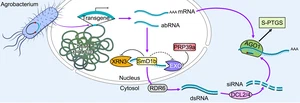
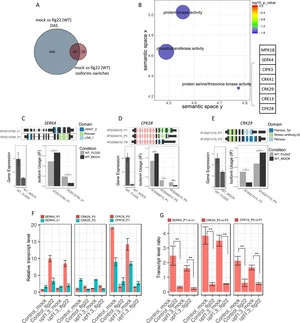
At the RNA level, we investigate alternative splicing, transcript maturation and quality control. We showed that MPK4 is required for pathogen-associated molecular pattern-triggered alternative splicing, used nanopore sequencing to resolve the complexity of plastid transcript processing, and demonstrated that the spliceosome components PRP39a and SmD1b act in post-transcriptional transgene silencing.
Related publications
- Bazin et al., 2020 — Role of MPK4 in pathogen-associated molecular pattern-triggered alternative splicing in Arabidopsis
- Guilcher et al., 2021 — Full Length Transcriptome Highlights the Coordination of Plastid Transcript Processing
- Bazin et al., 2023 — Synergistic action of the Arabidopsis spliceosome components PRP39a and SmD1b in promoting posttranscriptional transgene silencing
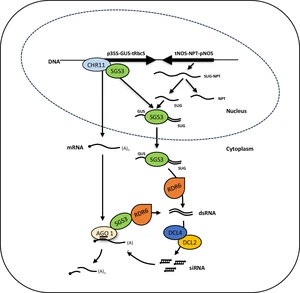
We are particularly interested in how RNA quality control and silencing machineries select their targets. We showed that SGS3 is recruited to chromatin by the remodeller CHR11 to select RNAs that initiate siRNA production, and that the SUPERKILLER complex subunit 3 mediates miR172-directed cleavage of Nodule Number Control 1 during Medicago nodulation. Together, this work provides the mechanistic context in which long non-coding RNAs and other regulatory RNAs operate.
Related publications
- Elmayan et al., 2025 — Arabidopsis SGS3 is recruited to chromatin by CHR11 to select RNA that initiate siRNA production
- Traubenik et al., 2025 — Subunit 3 of the SUPERKILLER complex mediates microRNA172-directed cleavage of Nodule Number Control 1 in Medicago truncatula

Related publications